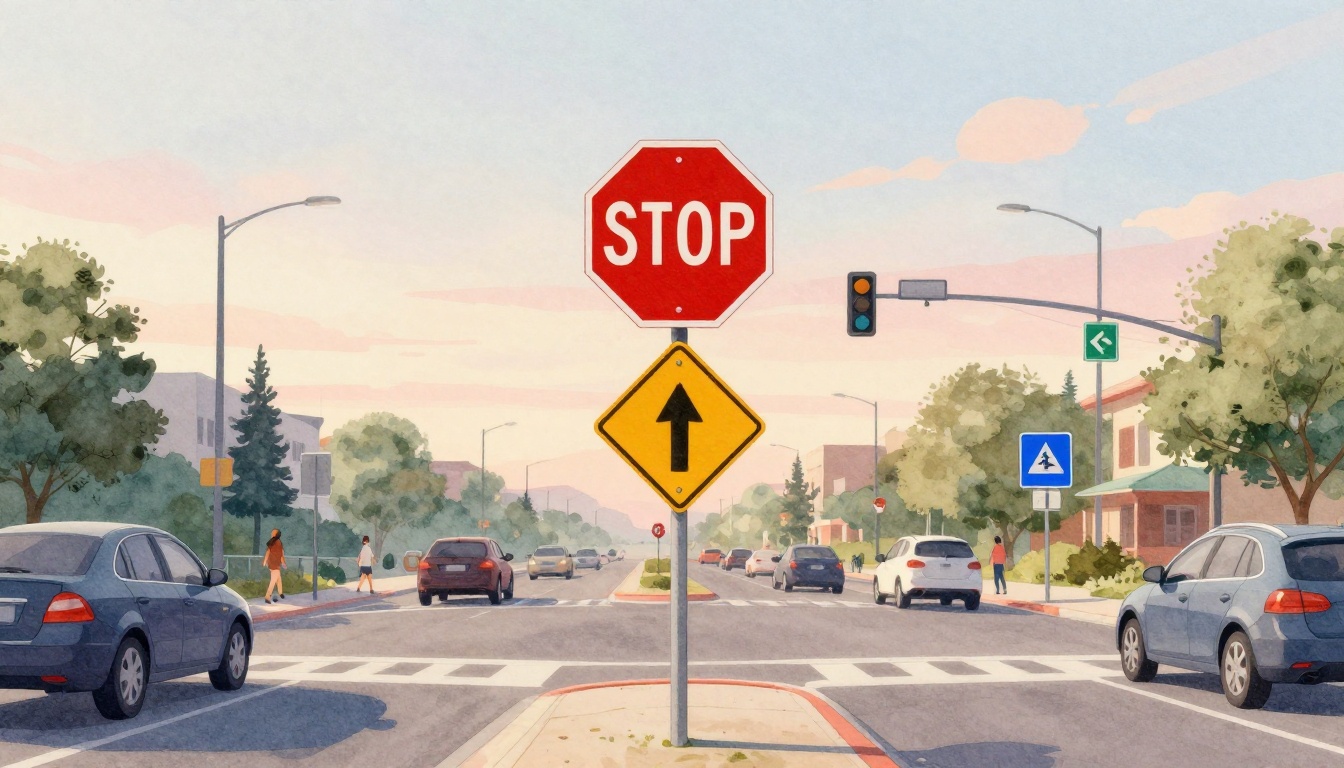
Picture this. You approach a busy intersection. A red octagon looms ahead. You roll through without stopping because it looks like a suggestion. Tires screech. Horns blare. That close call could end in disaster. Road signs prevent those moments. They guide you, warn you, and enforce rules. Knowing them keeps you safe, helps you ace driving tests, and dodges hefty fines.
In the US, the Manual on Uniform Traffic Control Devices (MUTCD) sets the standards. Its 11th Edition, updated with Revision 1 in December 2025, brings fresh changes. States adopted it by January 2026. New designs protect bikes and pedestrians better. Signs stay brighter at night too. For the full details, check the official MUTCD 11th Edition PDF.
This guide covers the five main types. Regulatory signs set laws. Warning signs flag hazards. Guide signs point directions. Temporary signs handle work zones. School signs protect kids. Each has unique shapes, colors, and meanings. Master them, and you’ll drive with confidence.
Regulatory Signs: The Rules You Cannot Ignore
Regulatory signs carry the force of law. Drivers must obey them or face tickets. These signs use white backgrounds with black, red, or green details. Shapes stand out. Octagons mean stop. Upside-down triangles signal yield. Rectangles cover speed limits and bans.
Ignore them, and risks skyrocket. A missed stop causes crashes. Speeding draws fines over $200 in most states. At night, retroreflective material makes them glow under headlights. Always scan for these first.
Common codes include R1-1 for STOP and R1-2 for YIELD. Speed limit signs like R2-1 show exact mph. No-entry signs block paths. The 11th Edition MUTCD tweaks sizes based on road type. This ensures clarity everywhere.
Stop and Yield: Traffic Flow Essentials
STOP signs demand a full halt. That red octagon appears at intersections. You stop behind the line. Check left, right, then go when clear. Four-way stops follow order. First arrival goes first. Ties mean right-of-way to the right.
YIELD signs slow you down. The red triangle says give way. Others pass first. You see them at merges or roundabouts. Hesitate if needed. Flow stays smooth because everyone yields properly.
Real spots include neighborhood corners. Busy merges on highways too. Practice right-of-way. It saves lives.
Speed Limits and Prohibitions That Keep Speeds Safe
Speed limit signs use black numbers on white rectangles. Obey the posted mph. Limits drop in towns or curves. They rise on open roads. Zones change fast, so watch closely.
Prohibitions ban actions. No U-turn rectangles halt illegal turns. No parking signs protect flow. Fines stack up quick. Speeding alone costs $100 to $500 plus points.
Follow these, and you avoid trouble. Zones adjust for safety. Drive the limit, stay ticket-free.
Warning Signs: Spotting Dangers Before They Hit
Warning signs grab attention. Yellow diamonds with black symbols alert to hazards ahead. They give time to slow or react. Curves, crossings, and animals top the list.
These signs save lives. Stats show most crashes happen at curves or intersections. Slow down when you spot one. Scan symbols quick. No words needed often.
Examples include W1-1 for turns, W2-1 for crossroads. W3-1 flags stops ahead. W11-2 marks pedestrian paths. The MUTCD stresses engineering studies place them right. For symbol meanings, see FHWA’s United States Road Symbol Signs PDF.
Build habits. Brake early. Hazards hide around bends.
Curve and Intersection Alerts You Need to Heed
Curve signs bend like the road. Sharp turn symbols warn of tight spots. Reduce speed before entry. Brakes work best on straightaways.
Intersection signs show crossroads or T-junctions. Y shapes or plus marks appear. Yield or prepare to stop. Look both ways even on green.
Adjust speed always. These spots claim many wrecks yearly.
Pedestrian and Animal Warnings on the Road
Pedestrian signs feature walking figures. Crossings lie ahead. Kids or crowds pop out sudden. Yield fully.
Deer signs picture jumps. Rural roads swarm at dawn and dusk. Brake firm if eyes glow. Collisions injure thousands.
Stay alert. Vigilance counts double here.
Guide Signs: Finding Your Way Without Stress
Guide signs direct you. Green rectangles or shields show routes, exits, and services. They cluster at ramps and forks. No commands, just info.
Highway shields like I-95 mark interstates. Mile markers track distance. GAS or FOOD icons point rest stops. Blue panels flag hospitals or phones.
Tourists love them. New drivers too. They ease trips. The 11th Edition refines designs for clearer reads. Check FHWA’s MUTCD Chapter 2A for standards.
Follow arrows. Destinations await.
Exit Numbers and Mile Markers for Easy Navigation
Exit signs count up or down. Number 12 means ramp soon. Direction arrows split north or south.
Mile markers dot edges. White numbers rise with travel. Lost? Backtrack by miles.
These tools simplify long hauls.
Temporary and Construction Signs: Navigating Work Zones
Temporary signs use orange. Diamonds or rectangles warn of changes. ROAD WORK AHEAD flags digs. FLAGGER AHEAD means workers direct traffic.
Slow to 25 mph often. Fines double here. Lanes shift sudden. Watch cones and barrels.
Flaggers use signs or paddles. STOP on one side. SLOW on flip. Protect crews first.
Stay patient. Zones end soon. For updates, visit the FHWA MUTCD site.
School Signs and Special Alerts for Extra Caution
School signs use yellow pentagons. S1 series marks zones ahead. Flashing lights mean kids active. Drop to 20 mph.
Bikes get new paths per 2026 updates. Memorial signs note past crashes. Fluorescent yellow-green aids radar speed displays in schools.
Kids dart out. Buses stop wide. Extra care saves young lives.
School Zones Where Kids Cross Unexpectedly
Pentagon shapes scream school. Speed drops sharp. Times post on signs. Active hours demand caution.
Crosswalks pair with beacons. Stop for waiting walkers. Fines hit hard for violations.
Watch buses too. They shield hidden kids.
Quick Recap and Test Your Knowledge
Road signs break into five types. Regulatory ones enforce rules with whites and reds. Warnings use yellow diamonds for dangers. Guides in green lead the way. Orange temporaries handle work. Yellow pentagons guard schools.
Test yourself quick:
- What’s a red octagon? (Full stop.)
- Yellow diamond means? (Hazard ahead.)
- Green rectangle shows? (Directions or exits.)
- Orange for? (Construction.)
- Pentagon shape? (School zone.)
Share your close calls below. Check your state’s DMV for tweaks. Review the MUTCD new signs status. Drive safe out there. Confidence comes from knowledge.