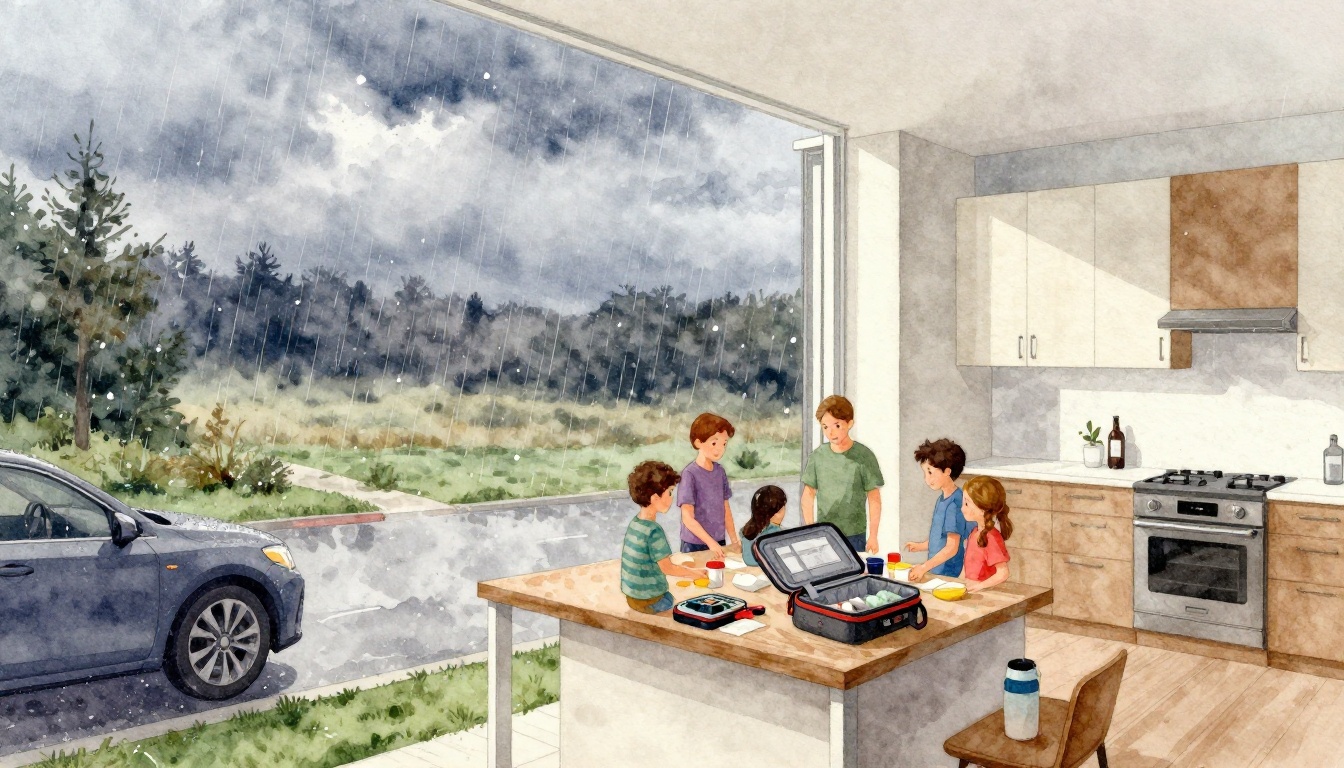
Early this year, severe storms ripped through the Plains and Midwest. Tornadoes hit Oklahoma and Michigan hard in March 2026. They damaged homes, knocked out power, and injured dozens. Chaos spread fast.
Poor weather includes heavy rain, snow, ice, thunderstorms, high winds, and fog. These conditions cause over 5,000 traffic deaths each year in the US, according to NHTSA data. Preparation cuts risks and saves lives.
You will find tips here on readying your home and car, safe driving rules, indoor protection, and smart outdoor moves. Ready to handle the next storm? Let’s start with basics.
Prepare Your Home, Car, and Family Before Bad Weather Strikes
Storms hit without warning. You need a plan now. Talk with your family about where to meet if power fails. Pick a safe room inside, away from windows.
Build an emergency kit first. Stock food, water, and tools for at least three days. Check smoke and carbon monoxide alarms monthly. Clear gutters and trim weak tree branches to avoid damage.
For cars, add winter tires from October to April. Keep gas tanks half full or EVs charged. Pack sand for traction, a shovel, and jumper cables. Know local alerts like winter storm warnings for six inches of snow or blizzards with winds over 35 mph and low visibility.
The Red Cross offers solid first aid and CPR advice to boost your skills. Review insurance policies too. These steps bring peace of mind and limit damage.
Build an Emergency Kit That Covers All Bases
Start with non-perishable food for three days. Think canned goods, energy bars, and formula for babies. Add one gallon of water per person per day.
Include a flashlight, extra batteries, blankets, and a first aid kit. Pack medications, cash in small bills, and pet food. For wet weather, toss in extra socks. Use cat litter for car tire grip on ice.
NOAA urges stocking up before storms arrive. Tailor your kit to local risks, like more blankets in cold areas. Store it in an easy spot. Check items twice a year and replace old batteries. This setup keeps you steady when help takes time.

Family monitoring a snowstorm forecast indoors.
Winterize Vehicles and Homes for Rain, Snow, and Wind
Homes need attention too. Clear leaves from gutters to stop ice dams. Trim branches near power lines. Insulate pipes against freezes.
Cars demand checks on tires, fluids, and wipers. Test the battery. Call 511 for real-time road updates. These habits prevent breakdowns.
In addition, secure outdoor items like patio furniture. After that, test your generator if you have one. Simple fixes now avoid big headaches later.
Master Driving in Rain, Snow, Ice, Fog, and High Winds
Skip the road if you can. Bad weather kills thousands yearly. Slow down and increase following distance to four seconds or more.
Turn on headlights and wipers in rain. Use low beams in fog, never highs. On ice, drive as if it’s always slick to spot black ice. For floods, remember six inches of water can knock you down; 12 inches sweeps cars away.
High winds mean no overpasses. Watch for flying debris. In thunderstorms, avoid flooded bridges. NHTSA shares key winter driving prep to stay ahead.
Follow these steps for safer trips:
- Check forecasts and road apps before leaving.
- Accelerate and brake gently.
- Steer into skids.
- Pull over safely if visibility drops.
You arrive home safe with practice.
Decide When to Skip the Drive Altogether
Blizzards ground most travel. Ice storms make roads deadly. Heavy floods block paths quick.
Check apps first. If warnings predict low visibility or high winds, stay put. Work from home or delay trips. Lives matter more than schedules.
Proven Techniques to Handle Slippery Roads and Low Visibility
Ease off the gas in rain or snow. Double your usual following distance. Pump brakes if ABS fails.
Fog demands low beams and slow speeds. Pull far off the road with hazards on if needed. Patience wins here. Practice builds confidence for real events.
Stay Protected Indoors When Storms Rage Outside
Head inside during lightning or high winds. Layer clothes with loose layers, then add water-repellent outerwear, hat, mittens, scarf, and boots.
Sip warm drinks and eat high-energy foods. Stay dry to fight hypothermia. Shovel snow slowly after storms. Clear roofs and walks first.
Never touch downed power lines; they shock from 30 feet away. For thunder, follow “when thunder roars, go indoors.” Skip showers, phones, or electronics.
Power outages call for safe heat sources. Insulate pipes with towels. FEMA lists storm safety steps like these.
You dodge injuries by following rules.
Beat the Cold and Follow Lightning Safety Rules
Indoors, unplug appliances during storms. Outdoors, crouch low if caught, cover ears, and seek cover fast.
Watch for hypothermia signs like shivering or confusion. Frostbite shows as numb skin or blisters. Warm up slowly. These moves protect fast.
Manage Power Outages and Hidden Home Hazards
Use flashlights, not candles near flammables. Stay 10 feet from downed lines. Charge phones early.
Eat perishables first. Insulate windows with blankets. Small actions keep nights calm.
Handle Outdoor Tasks Safely Even in Tough Conditions
Cut outside time short. Dress in layers that wick moisture. Protect skin with face coverings against frostbite.
In winds, dodge falling trees or lines. For lightning, find sturdy shelter; skip fields or tall objects. Floods demand higher ground. Never wade or drive through water.
Bring pets inside. After storms, inspect trees for weakness. Halt work in extreme cold, as some areas advise.
Gear up right. Finish chores without extra risk.
Dress and Gear Up to Limit Exposure Time
Base layer wicks sweat. Middle adds warmth. Outer blocks wind and rain. Cover head, neck, and hands.
Work in short bursts. Warm up inside often. Proper kit shortens misery.
Spot and Dodge Lightning, Floods, and Wind Dangers
Seek shelter at once in lightning. Climb to high ground in floods. Stay low in winds, away from edges.
Watch clouds and listen. Quick choices save trouble.
Prep kits and plans keep you ahead. Drive smart or stay off roads. Follow indoor rules and limit outdoor risks. Download NOAA, FEMA, or Red Cross apps today.
Share these poor weather safety tips with friends. Build your kit this week. You’re set for 2026 storms now. Preparation saves lives every time.