Distracted driving killed 3,275 people across the US in 2023. That’s about nine deaths each day. Now, in 2026, stricter hands-free laws cover 33 states plus DC. You can’t hold your phone at all in those places.
Road conditions shift fast. Rain slicks the pavement in minutes. Fog rolls in without warning. Fail to adjust, and you risk a crash. Adjust driving for road conditions like this saves lives and dodges fines.
This post covers simple habits that fit every drive. You’ll learn tweaks for rain, ice, fog, city streets, rural paths, highways, construction, and night. Plus, key 2026 rules on phones, move-over laws, and speed cameras. Core ideas include the 4-second following rule and scanning intersections. Practice these, and you’ll handle 2026 roads with confidence.
Master the Basics That Work on Every Road
Start with habits that shield you no matter the road. These basics cut most crashes because they keep you alert and space out.
Put your phone away before you shift into drive. In 2026, primary enforcement means cops stop you just for holding it. No glancing at texts. No propping it where you touch it. Set your GPS and music first. Focus stays sharp as a result.
Next, use the 4-second following rule. Pick a fixed spot ahead, like a signpost. When the car in front passes it, count “one thousand one, one thousand two,” up to four. That’s your gap. In traffic, it prevents tailgating pileups. On empty roads, it gives time to react. Always add more in bad weather.
Scan every intersection with the left-center-right-left pattern. Even on green lights, look both ways. Cars run reds. Pedestrians dart out. This quick check spots threats early.
Stay patient to avoid aggressive moves. Don’t weave lanes for a few car lengths gained. Speed up smoothly instead. Tailgaters pass on their own. Patience builds a safe buffer.
These steps form your foundation. They work in rain or sun because crashes often stem from lost focus or poor space. A friend once tailed too close on dry pavement and rear-ended a truck. Basics like these would have stopped that.
Build them into muscle memory. You’ll notice fewer close calls right away.
Tackle Tricky Weather: Rain, Ice, Snow, and Fog
Weather kills grip and sight fast. Adjust speed and space first. Visibility drops, so react early.
Slow down before trouble hits. Double your following distance beyond four seconds. Brake gentle to test traction. Clean windows and mirrors often. These changes keep control.
Real scenarios show why. Sudden rain catches drivers off guard. Ice hides until you slide. Fog blinds corners. Proper tweaks avoid slips and chains.
Rain and Wet Roads: Grip and Visibility Fixes
Rain makes roads slick, especially the first 30 minutes. Oil mixes with water for a greasy layer.
Cut speed in half. Post signs say 45 mph? Go 25. Your tires grip better then. Bump the gap to six seconds or more. Headlights go on with wipers, even in day. They help others see you.
Hydroplaning hits when water lifts tires. Ease off the gas smooth. Don’t brake hard. Steer straight until grip returns. Avoid puddles deep as hubcaps.
After a shower, roads dry uneven. Watch for shiny patches. These fixes cut spinouts big time.

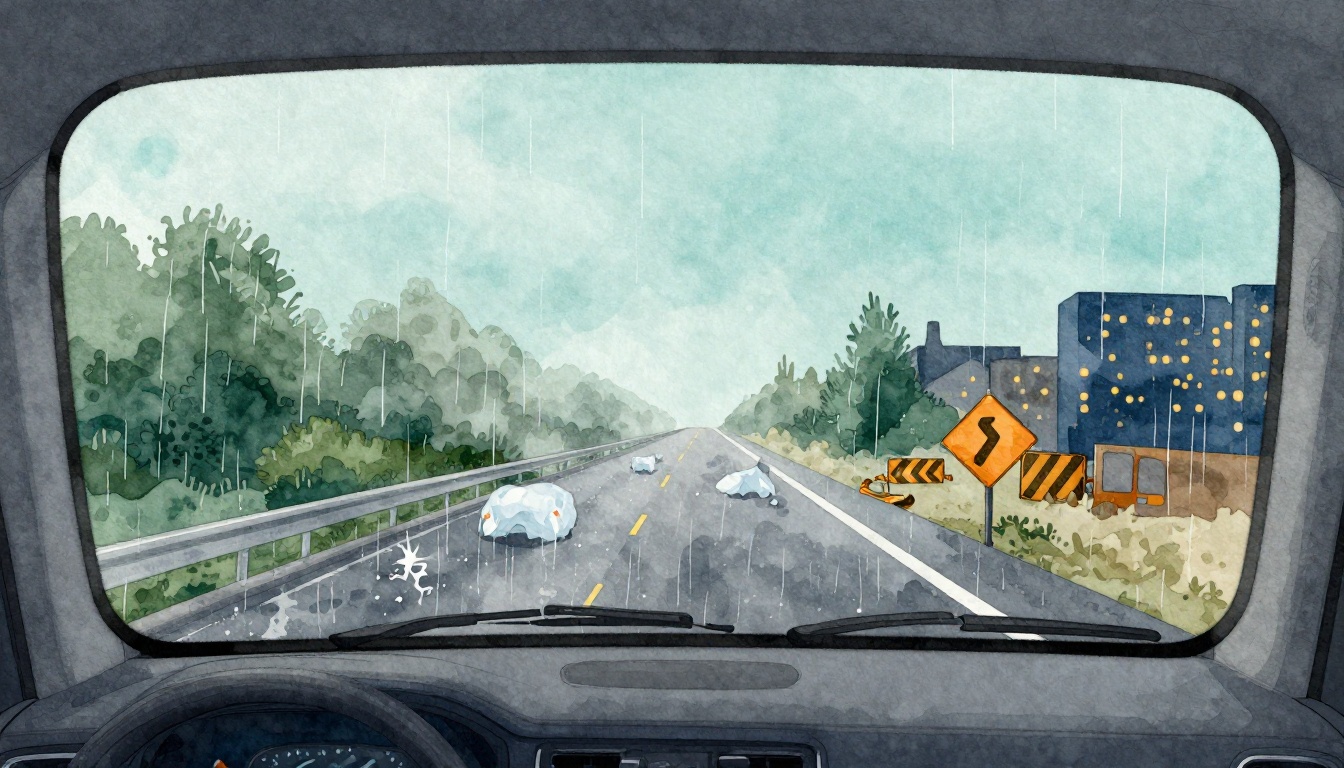
This scene shows rain adjustments in action. Tires hug the road when you slow right.
Ice and Snow: Smooth Moves to Stay in Control
Ice demands half speed or less. Snow piles drifts that hide hazards.
Brake in straight lines only. Pump gently if no ABS. Steer smooth, no sharp jerks. If skidding, steer into the slide’s direction. Front wheels point where you want to go.
Prep pays off. Use winter tires for bite. Chains help in mountains if legal. Accelerate slow from stops.
A skid feels scary, but calm fixes it. Countersteer light. Ease back on power. You’ll straighten quick.
Fog: See and Be Seen Without Panicking
Fog cuts sight to yards. Low beams or fog lights only. High beams scatter light back.
Crawl at 20 mph or less. Triple your gap. Honk at blind curves. Pull far right with flashers if sight drops to zero.
Extra caution at crossings. Scan hard left-center-right-left. Others creep too.
These steps make fog drives survivable. Visibility wins with patience.
Fine-Tune for Road Types: City, Rural, Highway, Construction, and Night
Roads vary by place. City buzzes with walkers. Rural hides deer. Highways flow fast. Match your style to each.
Expect the unexpected in crowds. Scan far ahead always. Obey signs strict. Fines hit hard now.
Daily tweaks dodge trouble. You’ll flow smooth and safe.
Buzzing City Streets: Pedestrians and Cameras
Cities pack people close. Yield full at crosswalks. Stop for jaywalkers sudden.
Cameras watch speeds and reds. New ones cut crashes 30 to 40 percent. Stick under limits. No phone, even stopped.
Tight turns need wide arcs. Watch bikes darting. These habits protect all.
Quiet Rural Roads and Fast Highways
Rural curves twist sharp. Deer bolt at dusk. Slow into bends. Scan empty spots; hidden stops lurk.
Highways need steady speed. Lane discipline keeps flow. For stopped cars with lights, move over or slow. 2026 expansions in states like Illinois and Massachusetts cover utility trucks too.
This law saves roadside lives. Check mirrors often.
Construction Zones and Dark Night Drives
Construction drops speeds low. Obey flags. Merge early. Eyes on workers first.
Night darkens edges. Clean headlights bright. Add gaps bigger. Pedestrians blend in black clothes.
Slower paces spot threats. Safe space rules.

Workers stay safe when you adjust like this.
Gear Up for 2026 Tech and Rules Changes
2026 brings fresh rules and tech. Stay ahead to cut risks.
Hands-free bans grew. South Carolina tickets full now. Insurance jumps for violations.
Move-over laws expand. Illinois hits January. Massachusetts adds utility trucks. Slow or shift for any hazard lights.
Speed cameras spread. They slash crashes 30 percent plus. Watch zones tight.
Impairment tech delays to 2027 cars. Still, focus manual.
These push core habits harder. No phone means full attention. Obey, and fines drop. Insurance dips too.
Tie back to basics. Scan, space, slow. You’re future-proof.
Safe Roads Start with Your Adjustments
Master basics like phone-free drives and 4-second gaps. Tweak for rain by halving speed. Ice needs smooth moves. City yields to walkers. Highways demand move-overs.
Practice turns these into instinct. Share one tip with a friend today.
What’s your toughest road condition? Comment below. Subscribe for more 2026 safety updates. Adjust smart, and you’ll save lives on roads ahead.