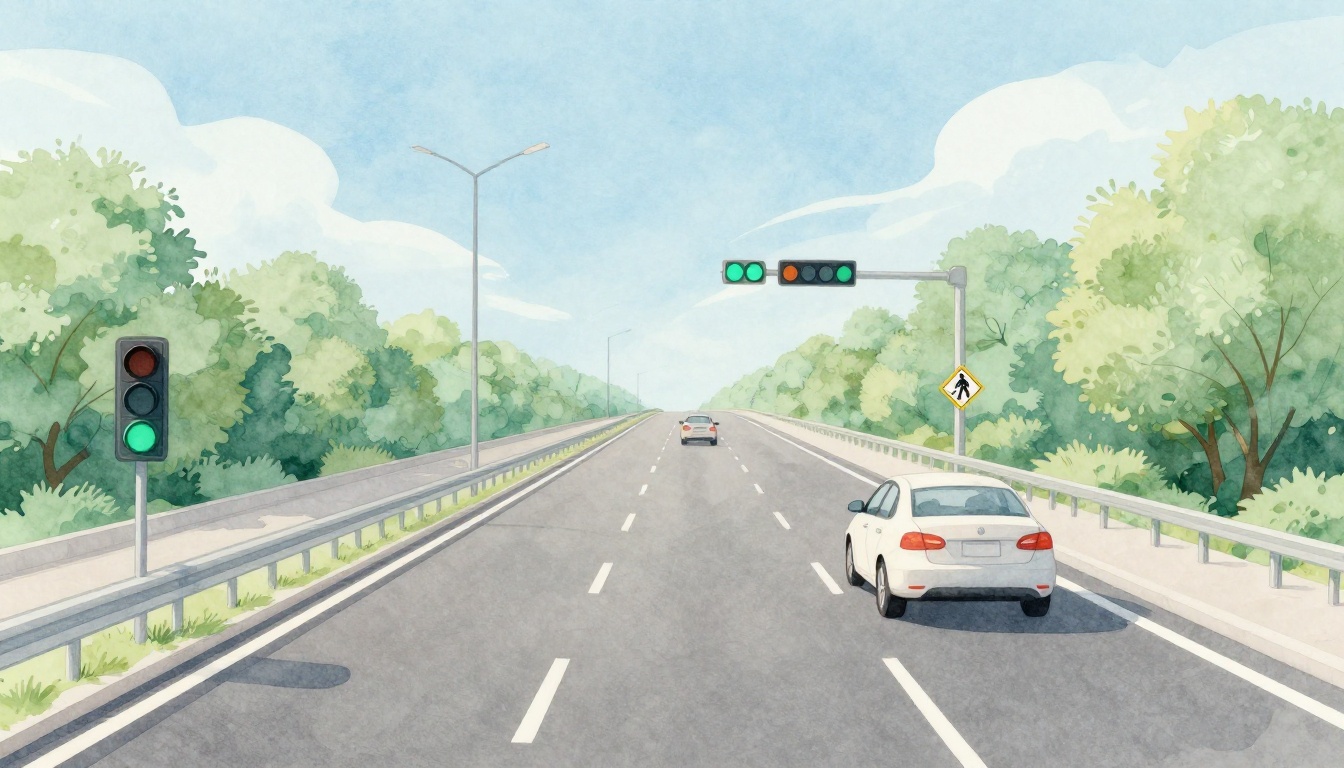
Picture this: you speed through a yellow light, only to cause a chain reaction crash. Speeding contributes to about one-third of all US traffic deaths each year. Basic violations like that kill thousands and injure millions more.
You drive every day, so you need these rules locked in. They keep you safe, protect passengers, and avoid tickets that spike your insurance. Most US traffic laws follow the national Manual on Uniform Traffic Control Devices (MUTCD), but always check your state’s DMV site for tweaks.
Let’s break down the essentials: speed controls, signs, right of way, safety gear, distractions, and fresh 2026 changes.
How to Handle Speed Limits and Keep a Safe Following Distance
Drivers often push speed limits and tailgate too close. That combo leads to rear-end crashes, which make up a big chunk of accidents. Stick to posted speeds, and you’ll cut your risk big time.
In cities, limits hit 25 to 35 mph. Highways run 55 to 70 mph, depending on the state. School zones drop to 20 to 25 mph when lights flash or kids mill about. Exceed them, and fines climb fast.
Average speed cameras rolled out wider in 2026. They track your speed over a stretch, not just a snapshot. Bust the limit, and pay over $750 in some spots. For more on core rules, check U.S. Rules of the Road: 13 Crucial Traffic Laws.
Tailgating kills reaction time. Follow the 3-second rule instead. Bad weather calls for 4 seconds or more. Trucks need a 7-second gap because they stop slower.
Think rainy highways. Water cuts traction, so space matters. At 60 mph, aim for two car lengths minimum. This simple habit dodges tickets and wrecks.
Posted Speeds and School Zone Slowdowns
Cities keep speeds low because of pedestrians and turns. Highways allow faster flow, but watch for changes. School zones demand extra care.
Slow to 20 to 25 mph when signs say so. Flashing lights mean kids cross soon. States vary a bit, but the basics stay the same nationwide.
One close call: a driver zips through at 35 mph. A child darts out. Brakes lock too late. For school zone tips, see this comprehensive guide. Caution saves young lives.
The 3-Second Gap That Saves Lives
Pick a fixed point like a pole. When the car ahead passes it, count “one-thousand-one, one-thousand-two, one-thousand-three.” Reach it by three? You’re good.
Rain adds a second. Snow demands more. Trucks brake over longer distances, so give them room.
This rule works because it accounts for your speed. Details on following distance appear in this complete guide. Practice it, and crashes drop.
Master Road Signs, Turn Signals, and Intersections
Signs guide safe flow. Ignore them, and chaos follows. Signals tell others your moves. Intersections test it all.
Red octagons mean full stop. Yellow triangles say yield. Diamond warnings flag curves or deer ahead. Obey every one.
Signal turns 100 feet before. Empty roads don’t change that. Cops watch this closely.
At reds, stop at the line. Yellows demand halt if you can safely. Right on red? Yield first unless a sign bans it. For four-way stop basics, review these right-of-way rules.
Red-light cameras surged in 2026. They snap violations with instant fines. Confidence comes from practice.
What Every Road Sign Demands From You
Octagons scream stop: come to a full halt. Triangles mean yield to others first. Diamonds warn of hazards ahead.
Speed limit signs set the max. No judgment calls. Colors help too: red for stop, yellow for caution.
Follow them strictly. They prevent most intersection wrecks.
Signaling Turns and Lane Changes Every Time
Flip that blinker 100 feet early. It gives bikes and cars time to react. Broken signals? Use hand signs: left arm out straight for left, bent up for right.
Officers ticket this often because it causes sideswipes. Always signal, even alone.
Safe Stops and Turns at Busy Intersections
Creep to the line on red or yellow. Yield to peds crossing. Right on red works after a full stop and clear path.
Cameras catch rollers now. Full stops keep you legal and alive. Scan left, right, then ahead.
Who Has Right of Way? Yielding Rules Made Simple
Right of way isn’t yours to take; you yield to keep order. Peds top the list. Emergencies next.
At crosswalks, stop for walkers every time. Bikes count too.
Pull over for sirens and lights. No-sign spots? Yield to the right.
Left turns yield to oncoming traffic. 2026 expanded move-over laws in states like California. Slow or shift lanes for any stopped vehicle with hazards on. Fines doubled there.
Four-way stops go first-come, first-serve. For controlled intersections, see these stop and yield rules.
Trust builds when everyone yields properly.
Pedestrians, Bikes, and Crosswalk Priority
Stop fully at marked or unmarked crosswalks. Walkers have priority, even jaywalkers in spots.
Bikes follow car rules but yield space. Watch for sudden moves.
This rule saves lives daily.
Emergency Vehicles and Pull-Over Musts
Hear sirens? Pull to the right shoulder if safe. Stop and wait till they pass.
Traffic ahead clears the path too. Don’t block.
Yielding at Unmarked Intersections and Turns
No signs? Vehicle on your right goes first. Straight traffic beats turns.
Oncoming cars own left turns. Patience prevents T-bones.
Buckle Up Right: Seatbelts, Kids, Headlights, and No Distractions
Everyone buckles up, front and back. Fines start at $200 per person unbuckled.
Kids need special seats. Infants rear-facing to 1 year or 20 pounds. Forward-facing to 40-65 pounds. Boosters until 4’9″.
Headlights go on with wipers or in low light. Dim highs at 500 feet oncoming.
Phones? Hands-free only in 33 states plus DC as of 2026. No holding, even at stops. Fines hit $100 to $800. For state seat belt details, check Seat Belt Laws by State.
Families stay safer this way.
Seatbelt Rules for Adults and Kids
Adults and kids over 16 buckle all seats. Younger ones follow stages.
Rear-facing first, then forward, boosters last. Weights and heights guide picks. Car seat laws vary; see this state table.
Front airbags kill tiny kids, so keep them back.
When to Flip on Your Headlights
Rain triggers wipers and lights. Dusk, dawn, fog too.
High beams light far but blind others. Switch low at 500 feet. Passers dim too.
Ditch the Phone: Hands-Free Laws Everywhere
Mount it or use voice. No touching in most states now.
Louisiana and Iowa ramped up in 2026. Fines stack quick. Eyes stay on road.
Steer Clear of DUI Traps and 2026 Tech Changes
BAC over 0.08% means trouble. Under 21? 0.02%. Drugs get zero tolerance, even weed.
First offense: $1000 fines, jail, license suspension. Repeaters install breathalyzers.
2026 brings real-time uninsured checks with $750 fines. Event data recorders log crashes. Emissions sensors pop up roadside.
Cameras track average speeds and reds everywhere. Stay sober and insured.
Blood Alcohol Limits and Drug Zero Tolerance
Blow 0.08 or higher, and penalties hit hard. Young drivers face lower limits.
Drugs impair like booze. No legal pass. Harsher trends mean think twice.
Big 2026 Updates Every Driver Should Watch
Hands-free bans spread, no-touch in more states. Cameras average speeds and catch reds.
Move-over covers all hazards now. Data loggers prove fault. Check DMV often.
These basics boil down to speed smarts, sign respect, yielding right, gear checks, no phones or booze. They slash crash risks from one-third speeding deaths to distraction woes. Lives depend on it, so verify your state’s rules via DMV as of April 2026.
Brush up today. Quiz yourself on gaps and yields. Share this with a new driver. Smart habits mean worry-free miles ahead.