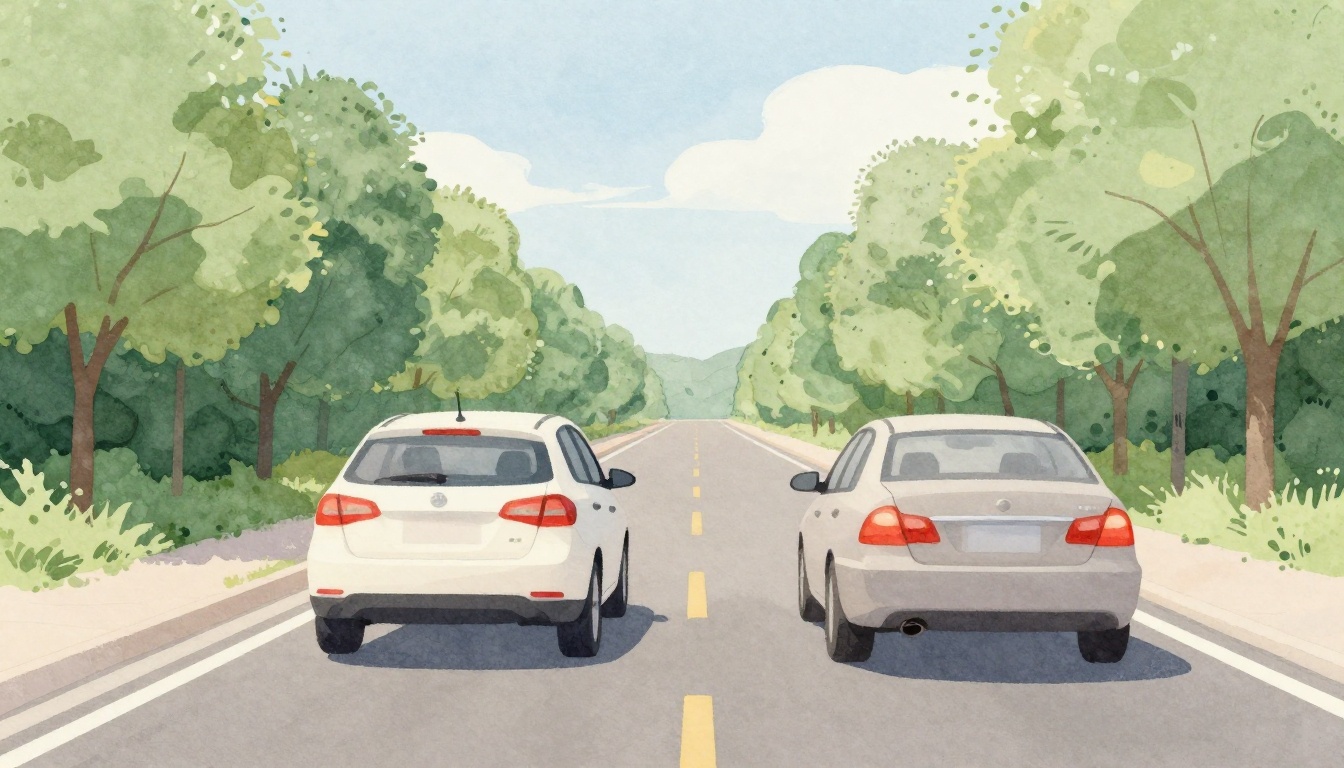
Picture this. You’re stuck in rush-hour traffic. The car ahead brakes suddenly. Your heart races as you slam on your brakes just in time. That close call? It happens because many drivers ignore safe following distance.
Safe following distance means the space you keep behind the vehicle ahead. It lets you react without crashing. Experts like the National Safety Council (NSC) and AAA call the 3-second rule the gold standard. You count three seconds after the car in front passes a fixed point. If you reach it sooner, back off.
Rear-end collisions top the list of common crashes. They account for 29% of police-reported accidents in 2023, per NHTSA data. Most stem from following too closely. That lack of space kills reaction time. Lives hang in the balance.
This article breaks it down. You’ll learn to master the 3-second rule. You’ll see when to add extra space for rain or trucks. Plus, you’ll grasp the real dangers of tailgating. Stick with these tips, and you’ll drive safer.
Mastering the 3-Second Rule Step by Step
The 3-second rule keeps it simple. It gives you time to spot trouble and brake. In good weather on dry roads, aim for at least three seconds. NHTSA, NSC, and AAA all back this baseline.
Why three? Average drivers need 1.5 seconds to react. Brakes take another 1.5. That totals three. Speed up the count, and you cut your safety margin.
Practice builds the habit. Start on quiet roads. Soon, it feels natural. For more on the rule of seconds, check this highway safety guide from Marks & Harrison.
A Simple Way to Check Your Distance on the Road
Pick a fixed point ahead. A road sign works best. Or try a pole or overpass.
Watch the car ahead pass it. Start counting right then. Say “one-one-thousand, two-one-thousand, three-one-thousand.” Your front bumper should not pass the point before three.
Test it on a highway. Say the lead car zips by a mile marker at 60 mph. Count steady. If you hit it at “two-one-thousand,” ease off the gas. Drop back until you reach three.
New drivers mess this up. They count too fast, like “one-two-three.” Speak slowly. Match a natural rhythm. Practice in empty lots first. Then hit low-traffic streets.
This method beats guessing feet. It adjusts for your speed. Rain or shine, it scales.
What Safety Experts Recommend Right Now
NSC sets three seconds as the minimum in ideal conditions. AAA agrees. They suggest two seconds under 35 mph, three at 35-45, and four above 46.
NHTSA echoes this. No big changes hit in 2026. The advice stays timeless. Some push four seconds for extra buffer.
Forget the old 2-second rule. That’s outdated. Trucks and wet roads demand more. NSC even floats five seconds as ideal.
Experts stress practice. Use it everywhere. City streets. Highways. It saves lives.
Key Times to Add Extra Space Behind the Car Ahead
Three seconds works in perfect setups. Real life throws curves. Bad weather doubles stopping distance. High speeds stretch it further.
Trucks need massive room. Tailgating them spells disaster. Adjust smart. Stay alive.
Start with basics. Over 40 mph, tack on one second. Hit rain? Double to six. Towing? Add per foot.
These tweaks prevent pileups. You’ll spot road hazards early. For official tips, see NHTSA’s severe weather driving page.
Adjusting for Rain, Snow, or Foggy Roads
Wet roads kill traction. Brakes lock up. Hydroplaning kicks in at 35 mph. Add two seconds minimum.
Double the count in heavy rain. Aim for six. Snow piles it on. Fog cuts visibility. Go slower. Count higher.
Example: Light drizzle on I-95. Lead car hits puddles. It slides. Your three seconds? Too tight. Six gives brake time.
Stats back it. Slippery roads boost crash risk. Oregon’s driver manual notes this. Check their lane travel section for space cushion details.
Slow down first. Then count. Wipers on? Space up.
More Space at High Speeds or in Heavy Traffic
Speed eats distance. At 55 mph, you cover 80 feet per second. Three seconds equals 240 feet. Still tight for emergencies.
Over 40 mph, add one second. Highways call for four base. Stop-and-go city? Three plus extra for sudden stops.
Highway flows smooth. Count easy. Traffic jams? Brakes flash often. Double up. Watch brake lights ahead.
Contrast helps. Empty interstate: three suffices. Rush hour: five prevents taps. Back off early.
Special Rules for Trucks, Towing, or Tall Vehicles
Trucks rule the road. Loaded semis weigh 80,000 pounds. They stop slow.
At 55 mph, cars need 133 feet. Trucks take 196. Add blind spots. Follow at four to seven seconds.
Towing? One extra second per 10 feet of trailer. Semis hit six plus.
SUVs blind drivers behind. Extra space shows hazards.
Physics rules. Momentum fights brakes. Heat builds fast. Stay back. See the whole rig.
Why Tailgating Puts Everyone in Real Danger
Tailgating robs reaction time. You can’t brake in time. Rear-ends follow.
These crashes dominate. They spark chains. Fines hit hard. Points rack up.
Space lets you see road ahead. Spot potholes. Swerve debris. Stay calm.
Distractions worsen it. Phone glance? Boom. Proper distance saves you.
Emotional toll? Families shattered. One second too close ends lives.
Eye-Opening Stats on Rear-End Crashes
Rear-ends claimed 29% of 2023 crashes. That’s millions. NHTSA tracks it.
Most hit stopped cars. 81% involve slow leads. Injuries? 18% serious.
Deaths drop overall. 2024 saw 39,345 total. Rear-ends persist.
Following too close tops causes. Tailgaters pay. Tickets sting.
Tech helps. Brakes auto-engage by 2029. Still, space rules now.
The Extra Risks When Trucks Are Involved
Trucks crush cars. At 55 mph, their 196-foot stop dwarfs cars’ 133.
You tailgate. Truck brakes. You’re toast. Underside hits pulverize.
Blind spots hide you. Driver can’t see. They shift lanes. Crunch.
Three law deaths in 2025? Rear-ends into semis.
Keep six seconds. Watch tires. See road ahead.
Safe Roads Start with You
Master the 3-second rule. Count it daily. Adjust for rain, speed, trucks. You’ll dodge rear-ends that plague 29% of crashes.
Tailgating tempts fate. Space buys time. Lives depend on it.
Practice today. Teach family. Check your state’s laws. Apps track counts.
Safer roads benefit all. Share these tips. Drive smart. Arrive alive.
What distance do you keep? Comment below. Read up on defensive driving next.