Many new drivers fail their driving theory test on the first try. They miss basic road sign questions or forget right-of-way rules. These tests cover road rules, signs, and safe habits across the US.
You need to score 70 to 85 percent correct to pass, like 80 percent in California. Common errors hit road signs, right-of-way, distances, BAC levels, and headlights. Recent prep guides show these areas cause most wrong answers. Fix them, and you hit that pass mark easily.
We’ll cover the top beginner slip-ups. You’ll get tips to avoid them and study smarter.
Mixing Up Road Signs and Speed Limits
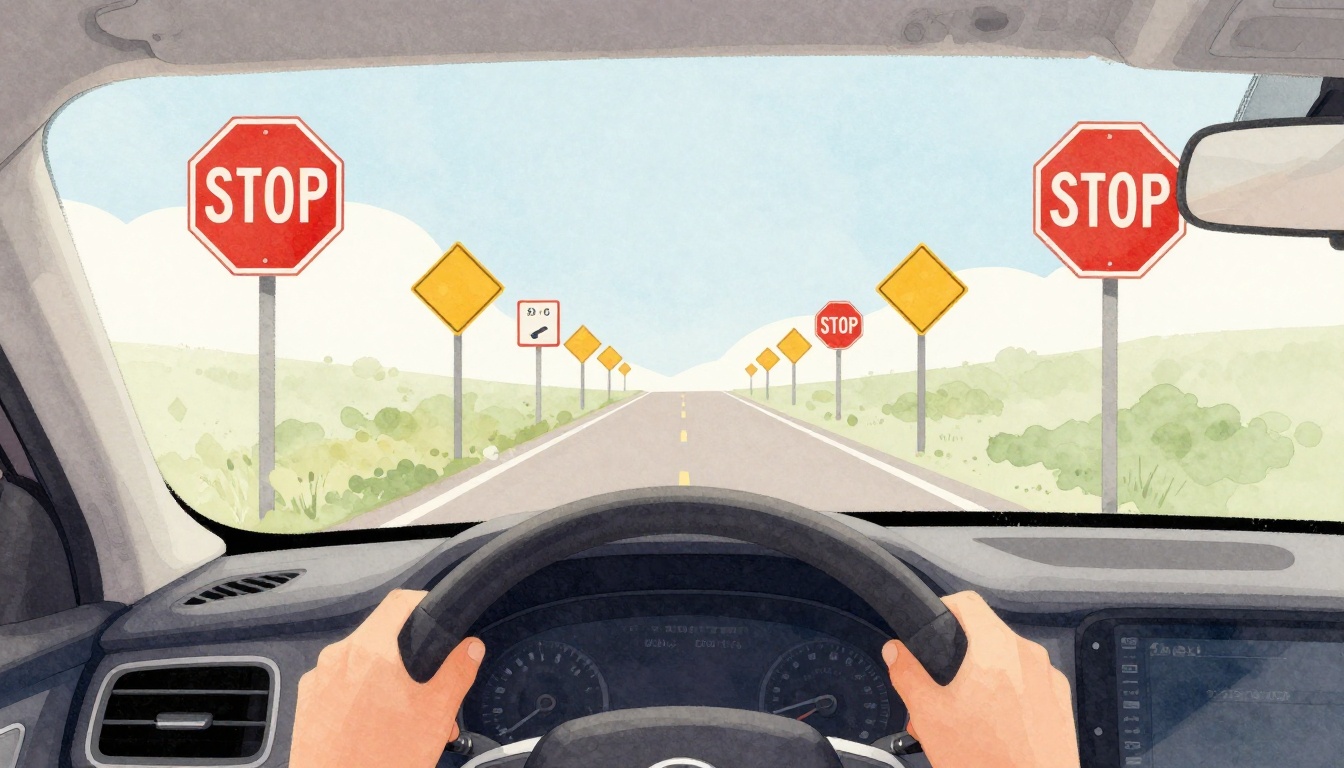
Beginners often glance past road sign details. They forget what shapes and colors mean. A red octagon always signals stop. Yellow diamonds warn of dangers ahead.
Speed limits confuse them too. School zones drop to 20 or 25 mph. Highways stick to 65 or 70 mph in most states. Tests pull examples from state handbooks. One wrong guess tanks your score.
Practice helps. Memorize five to ten key signs each day. Check your state’s rules, because they vary a bit. Quiz yourself before bed. That sticks better overnight.
Real scenarios trip people up. You see a white triangle with a red border. That’s yield, not stop. Confuse them, and you fail the question. Always yield where needed.
For official sign standards, check the MUTCD guide on conventional road signs. It lists shapes and colors clearly.
Why Color and Shape Matter More Than You Think
Colors guide you fast. Red means stop or no. Yellow warns of hazards. Green points the way forward.
Beginners mix regulatory signs with info ones. A blue circle allows parking. A red one bans it. Tests love these swaps.
Practice fixes it. Use free online flashcards from your state’s handbook. Repeat daily. Soon, shapes pop in your mind.
Speed Traps in School Zones and Cities
School zones slow you to 20 to 25 mph. Flashing lights mean active hours. Cities default to 30 or 35 mph.
Weather changes things. Construction drops speeds too. Beginners forget to scan for signs.
Map your routes ahead. Spot limits early. That builds habit before the test.
Getting Right-of-Way Wrong at Intersections
Right-of-way decides who goes first. Intersections get busy fast. Four-way stops need full attention.
Top fails involve pedestrians or emergency vehicles. Pedestrians win every time. Sirens mean pull over now.
Beginners assume bigger vehicles lead. That’s wrong. Size never trumps rules.
Follow the yield-to-the-right rule. Study DMV diagrams. In 2026 prep trends, these questions rose.
Learn more from this right-of-way rules lesson. It breaks down stops and yields.
Pedestrians and Crosswalks Come First
Stop for walkers in marked crosswalks. Unmarked ones count too, if signals allow.
Jaywalkers still have rights. Don’t speed past. Urban tests use busy street examples.
One common fail: thinking peds wait their turn. No. You stop first.
Roundabouts and Uncontrolled Intersections
Yield to traffic already in the roundabout. Keep speed low.
At uncontrolled spots, first arrival goes. If tied, right-most yields.
Don’t always stop. Flow if clear. Watch practice videos. They show real flow.
Underestimating Safe Distances and Stops
Safe distances cause 70 percent of fails in prep data. Following too close risks crashes.
Use the 2-second rule in dry weather. Double it for rain. Braking grows with speed squared.
Beginners skip the math. They guess instead. Count seconds behind cars.
Apps help practice. Pick a landmark the front car passes. Say “one-thousand-one.” Reach it on two. That’s good.
This avoids rear-ends. Real crashes drop when drivers follow it.
See Pennsylvania’s guide on managing space. It stresses cushions around your car.
The 2-Second Following Rule Basics
Pick a fixed point. Count as the car ahead passes it.
Tailgating cuts reaction time. Trucks need more space. Rain adds two seconds.
Adjust always. Practice on drives.
Total Stopping Distance Breakdown
Reaction time plus braking equals total stop.
At 60 mph, you need over 200 feet. Here’s a quick table:
| Speed (mph) | Reaction Distance (feet) | Braking Distance (feet, dry) | Total (feet) |
|---|---|---|---|
| 30 | 44 | 45 | 89 |
| 40 | 59 | 80 | 139 |
| 50 | 73 | 125 | 198 |
| 60 | 88 | 180 | 268 |
Tests use these numbers. Wet roads double braking. Know them cold.
BAC Levels and Headlight Rules That Surprise Newbies
BAC limits catch many off guard. Zero tolerance for under-21 drivers. Adults face 0.08 percent.
Underage means no alcohol at all. Intermediates hit 0.02 in some states.
Headlights turn on at sunset to sunrise. Many states add wipers.
Read the handbook fully. Apps update rules for 2026.
Memorize numbers. Check your state often.
Details vary by state in this DUI laws reference.
Alcohol Limits by Age Group
Under 21: 0.00 percent BAC. No drinks before driving.
Some states set 0.02 for new licenses. Adults get 0.08.
Fines hit hard. Licenses suspend quick. Close calls end careers.
Here’s a summary table:
| Driver Type | BAC Limit | Common Penalty |
|---|---|---|
| Under 21 | 0.00% | License suspension |
| Intermediate | 0.02% | Fines, classes |
| Adult (21+) | 0.08% | DUI charge, jail risk |
Study these. They pop on tests.
When Headlights Must Be On
Turn on 30 minutes after sunset. Off 30 before sunrise.
Rain or wipers mean lights too, like in California. Fog needs low beams.
Forget it, and you fail easy points.
Falling for Sneaky True or False Questions
True-false traps use “always” or “never.” Double negatives confuse.
“You never yield to bikes” sounds true fast. It’s false. Bikes have rights.
Rushing causes fails. These boost wrong answers by 20 percent in practice.
Read twice. Underline key words. Practice sets online sharpen you.
Spotting Absolute Words Like Always
“Always stop at green lights.” False. Arrows matter.
Rewrite questions in your head. “Always” means no exceptions. Rare in rules.
Grab free practice. Spot patterns quick.
Most tests mix these in. Master them for easy points.
Passing your driving theory test sets you up right. Dodge mistakes on signs, right-of-way, distances, BAC, headlights, and true-false traps. Study your state handbook. Take five practice tests. Hit weak spots hard.
You’ll score over 80 percent and pass first time. Safe driving starts here.
Share your test story below. Try free quizzes from DMV sites today.